The laundry and dry cleaning business looks simple from the outside — clothes come in, clothes go out. But anyone who has actually run a store knows how much is happening behind the counter at any given moment. There are garments to track, customers to call, invoices to generate, pickup slots to manage, and staff to coordinate. A decade ago, most of this was handled with paper registers, handwritten tags, and a lot of memory.
That worked when volumes were manageable and most customers walked in. It does not work nearly as well now. Customer expectations have shifted. People want text message updates. They want to know when their order is ready without having to call. They want to pay digitally. And if you run more than one location or offer home pickup and delivery, the complexity multiplies fast.
This is the environment where dry cleaning software has gone from a nice-to-have to something genuinely necessary for stores that want to grow without losing their minds.
Book Demo Today
Why Many Dry Cleaning Businesses Struggle as They Grow
A single-counter dry cleaning store with a handful of regulars and low daily volume can function reasonably well on basic systems — even paper. Problems starts when order volume turn high, when staff turnover happens, or when an owner tries to open a second location.
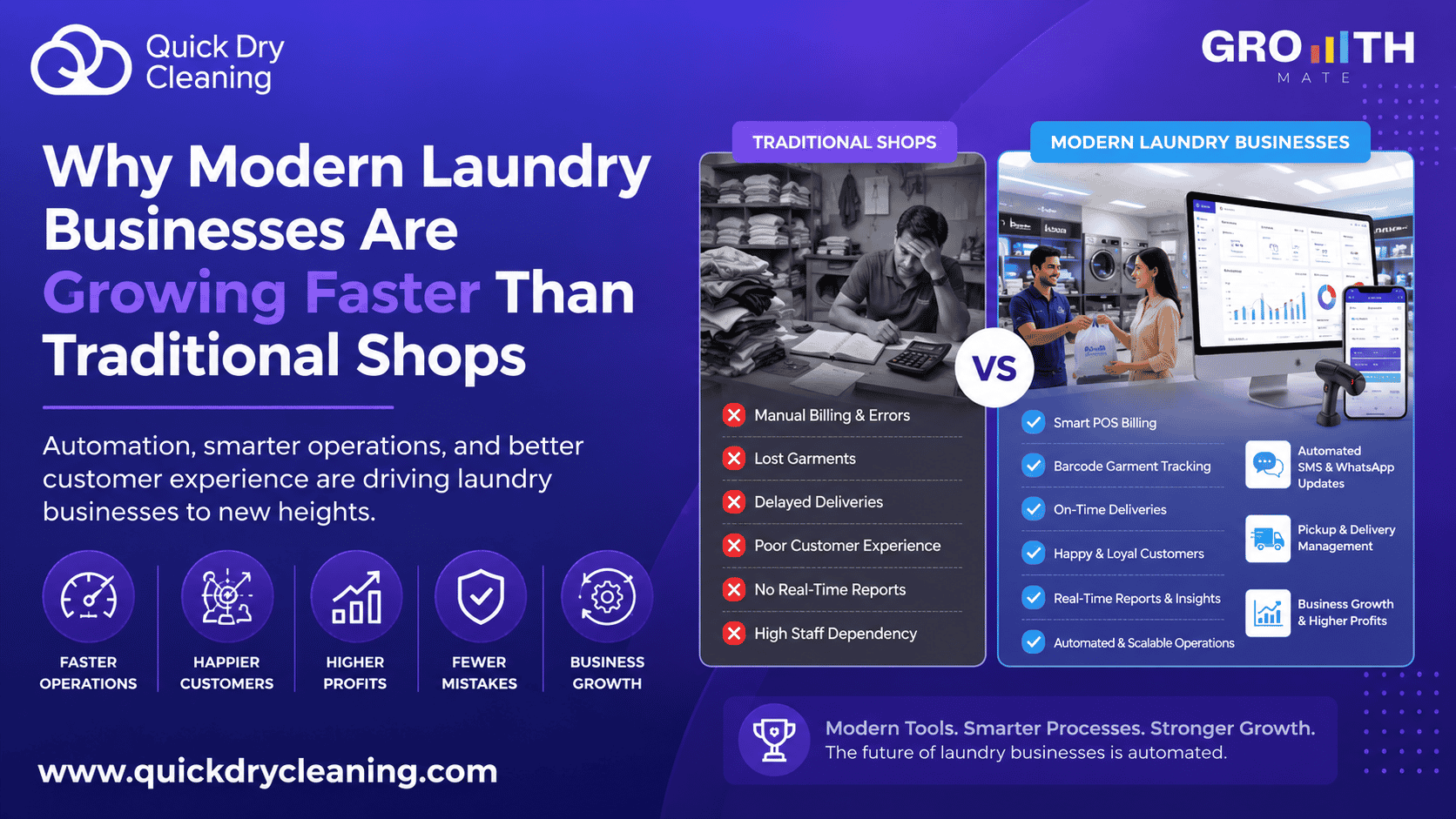
The biggest pain point, in most cases, is not the cleaning itself. It is tracking. When you have 60 or 80 orders moving through a store on any given day, things get missed. A garment placed on the wrong rack. A customer shows up and no one can find the order. None of these problems are terrible individually, but they add up — in refunds given, in time spent searching for things, and in customer trust lost.
There is also the staff issue. When processes live in one person’s head, that person becomes the bottleneck. If the experienced cashier is out sick, the rest of the team fumbles. This is not a people problem; it is a systems problem.
And then there is the data problem. Most owners who are running on manual systems genuinely do not know which services are most profitable, which customers have not returned in months, or whether their delivery route is efficient. They make decisions on gut feel, which sometimes works and sometimes does not.
Common Operational Challenges in Laundry and Dry Cleaning Stores
- Order management and garment tracking. Without a proper garment tracking system, the process of receiving, sorting, cleaning, and returning clothes relies heavily on physical tags and staff vigilance. The margin for error is real. Customers who receive the wrong garment, or whose order cannot be found when they arrive, are rarely forgiving — and given how many options exist now for laundry services, they have no particular reason to return.
- Billing errors and slow checkout. Manually calculating orders for customers who have a mix of items — a suit here, a saree there, some household linen — takes time and invites mistakes. Errors in billing create disputes that are awkward to resolve and damaging to trust.
- Customer communication. Calling customers one by one to tell them their orders are ready is genuinely inefficient. Most stores do not do it consistently, which means customers show up before orders are ready or orders sit uncollected for days because no one remembered to follow up.
- Pickup and delivery logistics. Offering home pickup and delivery is increasingly expected, especially in urban markets. But managing it without a proper system — keeping track of who requested pickup, when, from which address, and what they handed over — is chaotic. Drivers end up calling the store repeatedly. Orders get mixed up. Customers complain about missed slots.
- Reporting and business visibility. Without consolidated reporting, it is very hard to know how the business is actually performing. Revenue numbers, pending orders, average ticket size, top customers by spend — this information is valuable but inaccessible if it is scattered across handwritten registers or disconnected spreadsheets.

What Dry Cleaning Software Actually Helps With
Good dry cleaning management software does not replace the expertise and effort of running a cleaning business. What it does is remove the friction from the administrative and tracking side of things, so that effort can go into the work itself and into customer relationships.
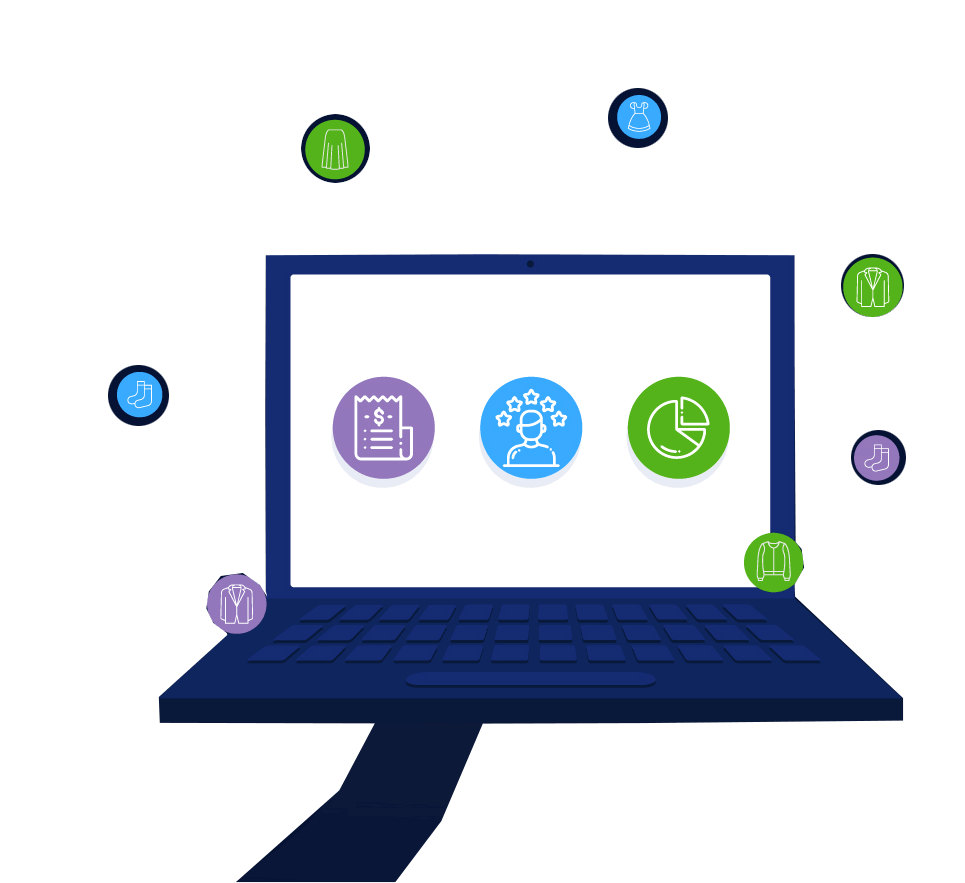
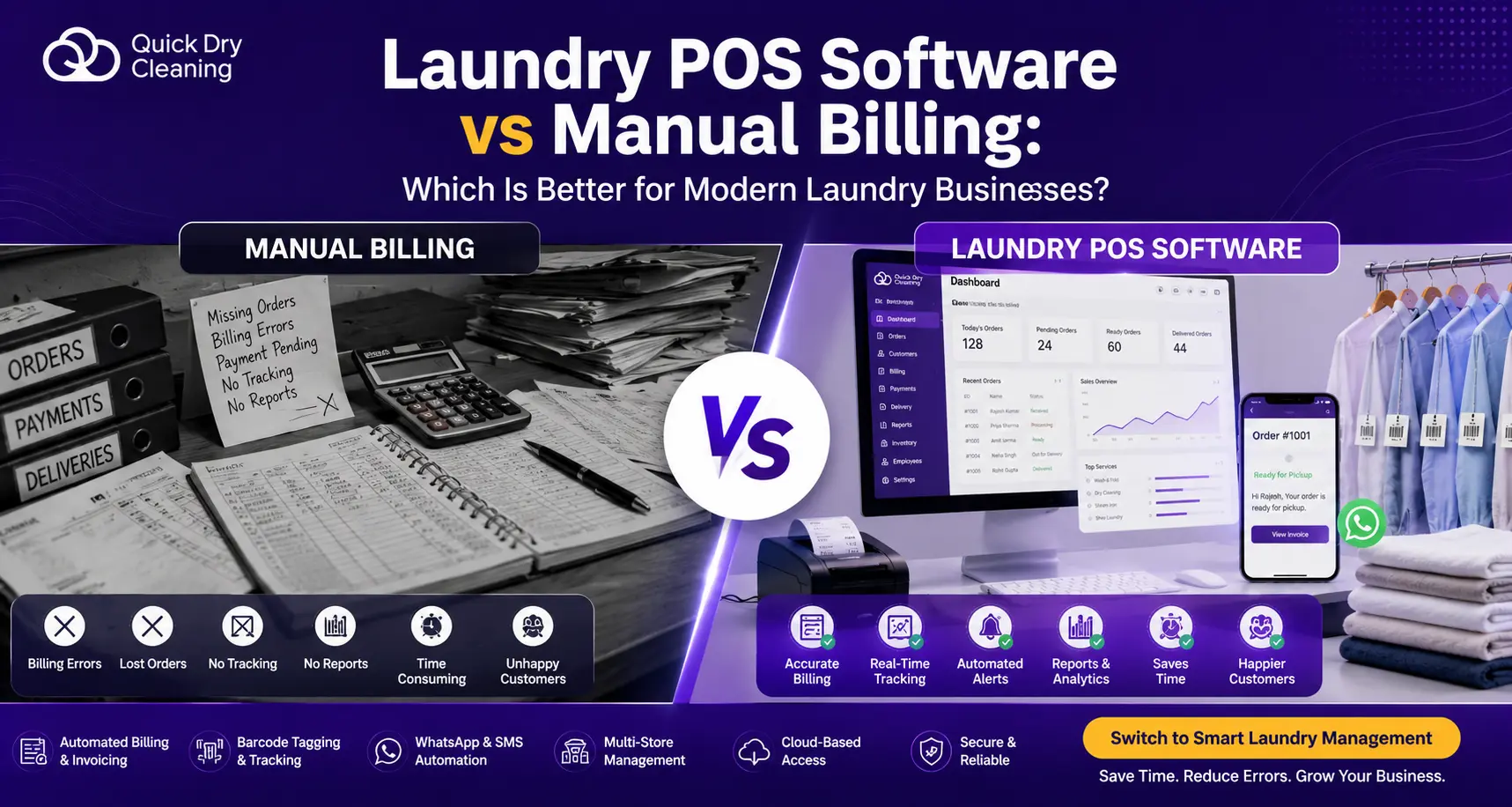
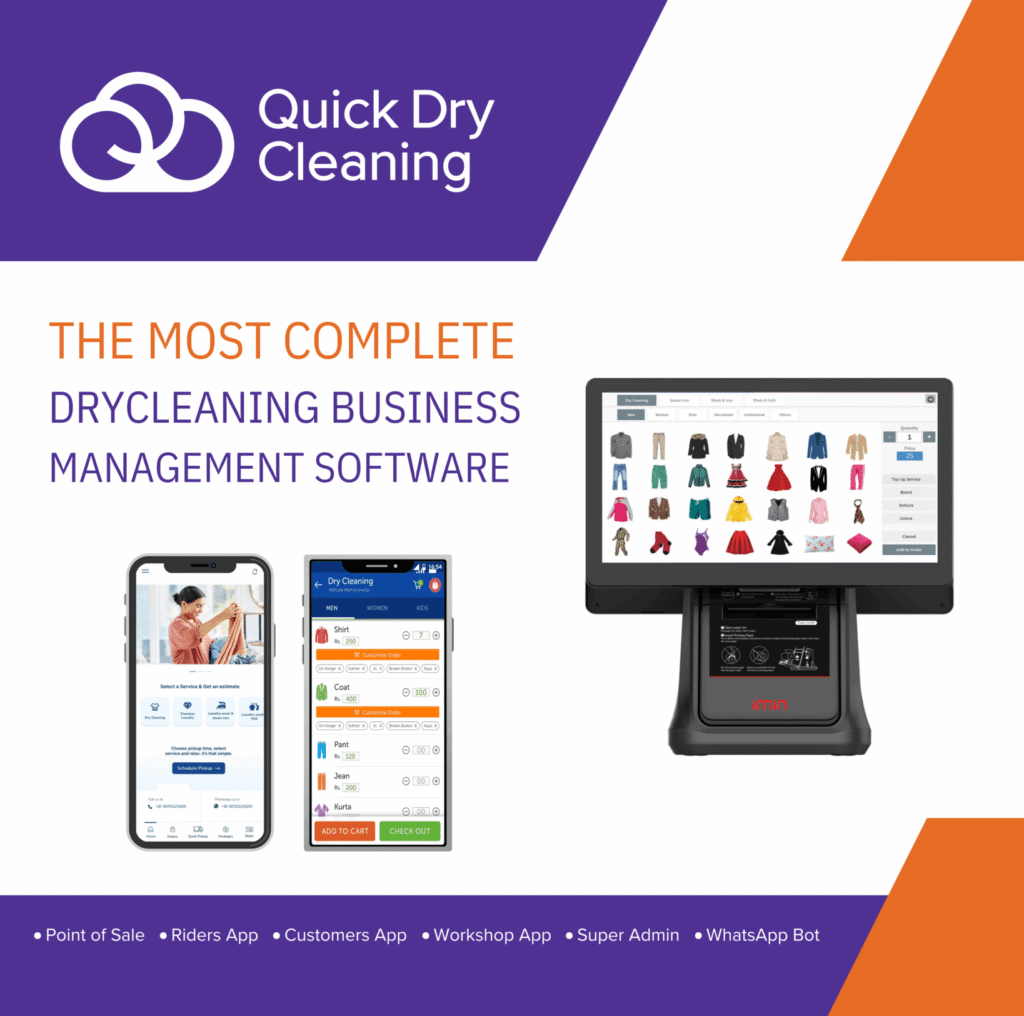
On the operations side, laundry management software brings order intake, garment tagging, status tracking, and order completion under one system. Staff at the counter know exactly what has been received, what stage each order is at, and what is ready for pickup. That information is not in someone’s head — it is in the system, accessible to anyone who needs it.
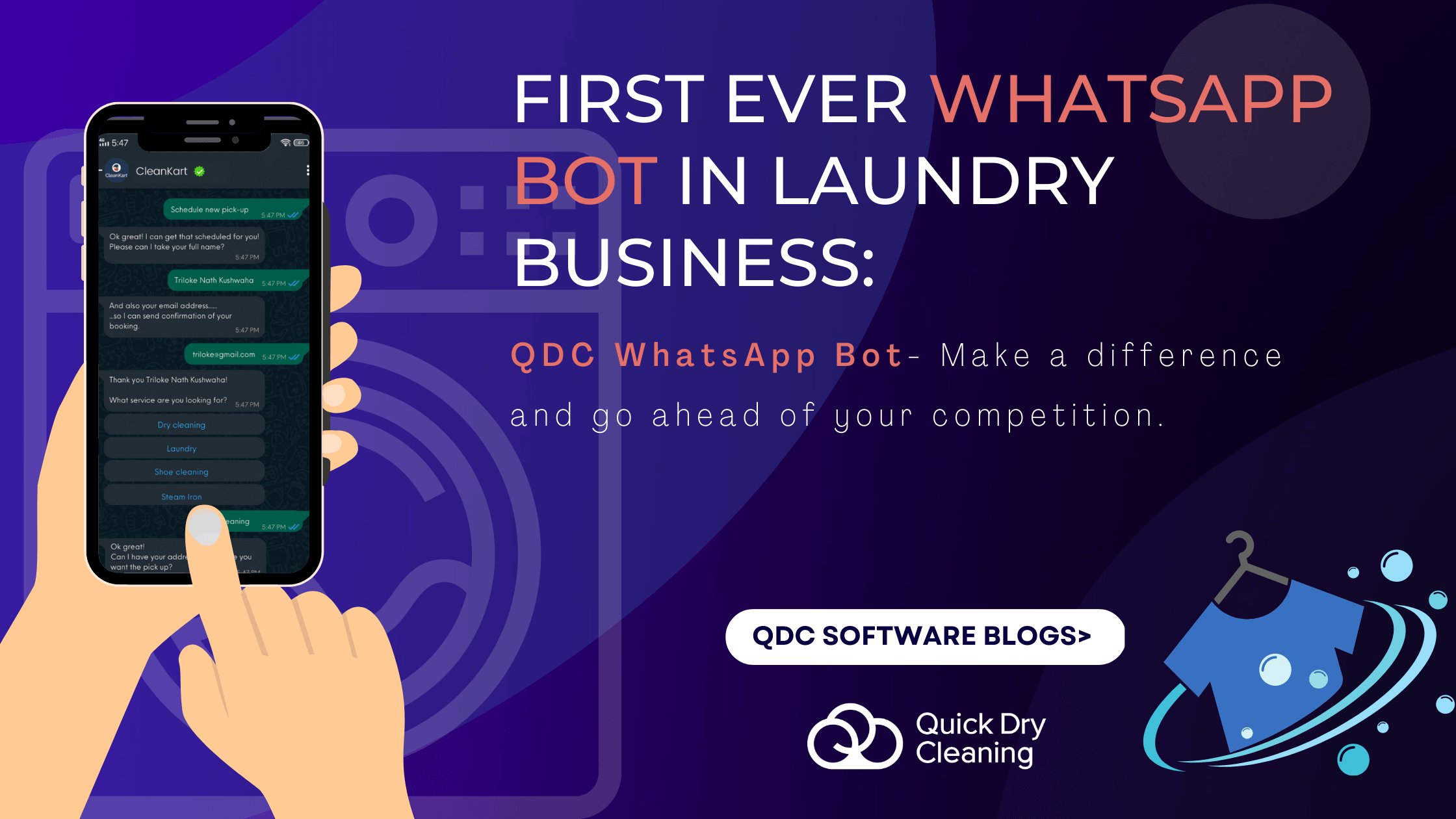
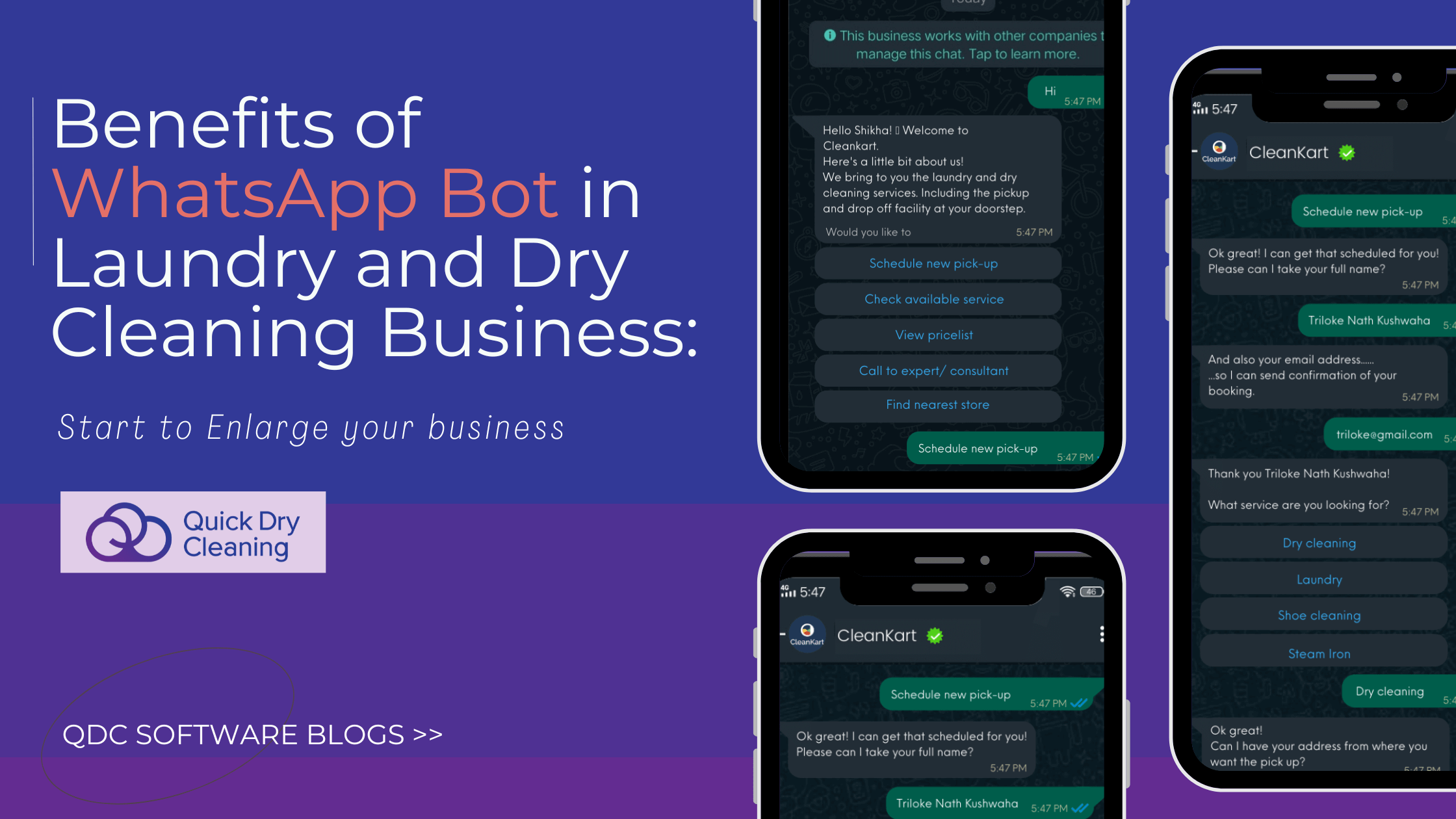
On the customer side, laundry business software can automate the communication that most stores handle badly or not at all. Ready-order notifications via SMS or WhatsApp, pickup reminders, and payment receipts — these are things customers appreciate and that most stores underdeliver on.
For businesses running pickup and delivery, dedicated route and slot management within dry cleaner software makes the difference between a delivery operation that feels professional and one that feels improvised. Drivers have clear assignments. Customers get confirmation. The back-office team can see what has been picked up and what is pending without making phone calls.
From a financial standpoint, laundry billing software generates accurate invoices automatically, tracks payments, and flags outstanding dues without anyone having to chase a register. That alone saves hours every week in mid-to-large volume stores.
How Technology Is Changing Customer Expectations
Customers who use food delivery apps, online banking, and e-commerce platforms have developed certain expectations about any service they pay for. They expect confirmation when something is received. They expect updates on status. They expect digital payment options. And they expect their past preferences or order history to be on record if they are a returning customer.
Dry cleaning used to be exempt from these expectations because it was a niche, relationship-driven service. That is less true than it used to be. Aggregator platforms have made it easier than ever for customers to try a different laundry or dry cleaner. Differentiation increasingly comes from experience — how smooth the process feels, how well the communication works, how easy payment is — not just from cleaning quality.
Laundry software is what makes it possible to meet those expectations without hiring a full back-office team. A well-implemented system handles the digital touchpoints automatically, so the store feels professional and attentive even when the counter staff is busy.
What Business Owners Should Look For Before Choosing Dry Cleaning Software
If you are evaluating laundry software for the first time, or reconsidering what you currently use, a few things are worth thinking through before you commit.
First, check whether the software was built for laundry and dry cleaning specifically, or whether it is a general POS or service business tool that has been adapted. The difference shows up in details — whether garment-level tracking is built in, whether the pricing structure supports the way cleaning businesses actually charge, whether the order workflow reflects how a cleaning store processes work.
Second, think about your staff. Software that is technically capable but confusing to use on the counter will either be abandoned or used incorrectly. Demo the system with the people who will actually be using it at the register, not just with the owner.
Third, consider your growth path. If you plan to add a delivery service or a second location in the next couple of years, make sure the software supports those features. Migrating to a new system after growth is disruptive.
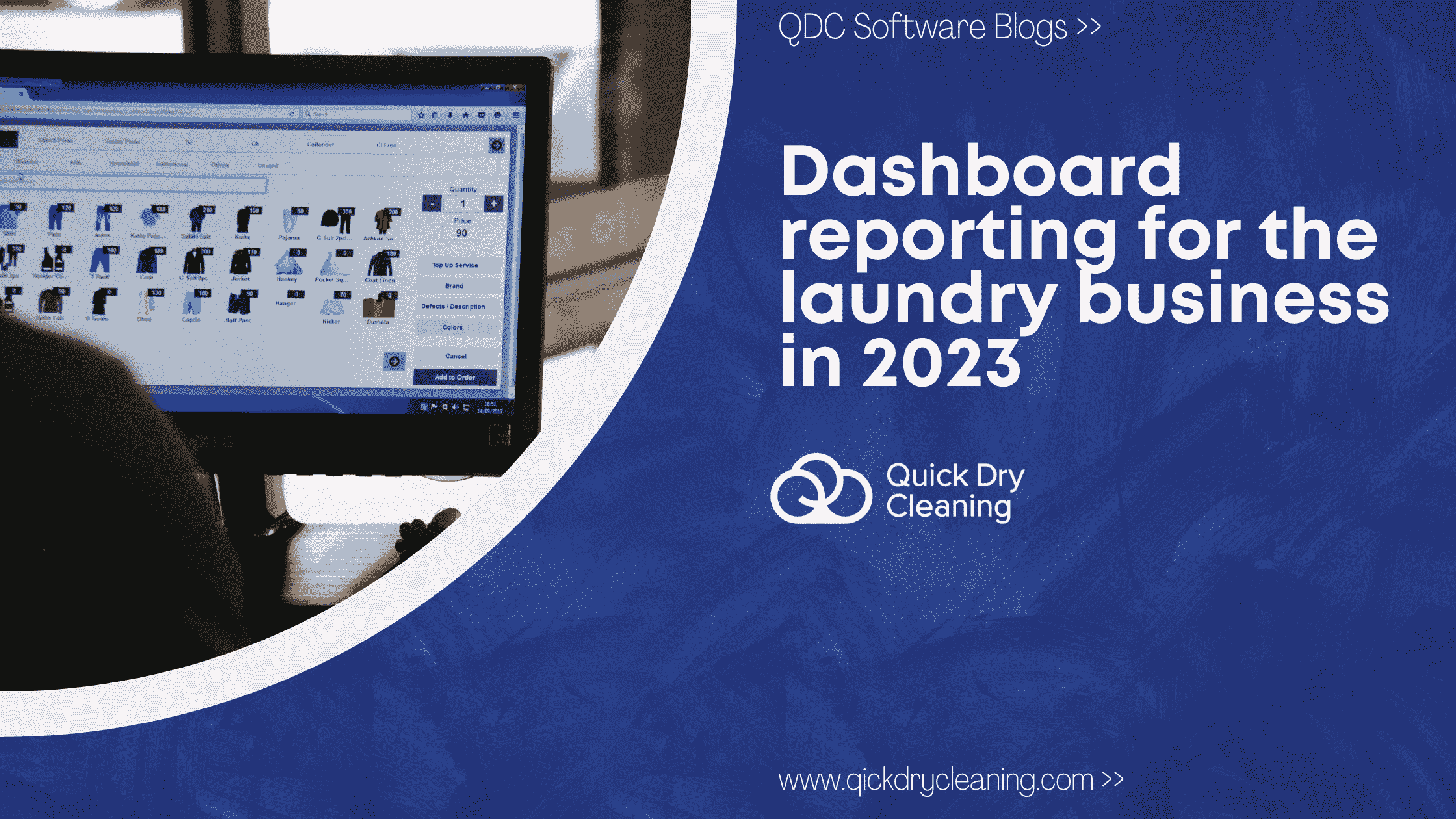
Fourth, evaluate reporting. If you cannot easily pull a report showing daily revenue, pending orders, and top customers, the software is leaving useful information locked away. The reporting capability of laundry management software is often undervalued during purchase and sorely missed afterward.
Finally, look at support. Laundry is a daily business. If the software has a problem on a busy Monday morning, you need someone to respond quickly. Ask about support response times and availability before you sign up.
Why Choose Quick Dry Cleaning Software?
Quick Dry Cleaning Software was built specifically for the laundry and dry cleaning industry, which matters more than it might initially seem. Generic business software — even good point-of-sale systems — tends to miss the specific workflows of a cleaning business. They are not designed around garment types, cleaning processes, or the particular billing structures (per piece, per weight, by category) that dry cleaning stores use. QDC is.
- Industry-specific design. The product reflects how cleaning businesses actually operate, not how a generic retail or service business works. The order flow, the item catalog, the garment tagging process — all of it maps to how dry cleaning stores are structured in practice.
- Staff adoption. One of the most common complaints about business software is that staff do not use it properly, or at all. QDC’s interface is built to be usable by counter staff with minimal training. The learning curve is short, which matters when you have part-time employees or occasional turnover.
- Order tracking. Every garment that comes in gets tracked through its lifecycle — received, in process, ready, delivered, or picked up. Nothing falls through the cracks because the system has eyes on every order. This also means customers can be given accurate status updates at any point.
- Customer management. QDC maintains a customer database that stores order history, preferences, contact details, and outstanding balances. For returning customers, the checkout process is faster. For follow-up communications, the data is already there.
- Billing. Invoicing through QDC is accurate and fast. The system handles different pricing tiers, discounts, advance payments, and partial settlements. Billing disputes become far less frequent when customers receive clear, itemized invoices automatically.
- Pickup and delivery management. For stores that offer home collection and delivery, QDC’s pickup and delivery module tracks requests, assigns routes, logs what was collected from each address, and updates order status as items move through the process. It brings structure to what is otherwise the most chaotic part of running a laundry business.
- Business reporting. QDC generates reports on revenue, order volumes, pending work, customer retention, and more. These are not complex reports that require an analyst — they are practical summaries that help an owner understand what is happening in the business and where attention is needed.
- Scalability. QDC is used by single-counter stores and by businesses running multiple locations. The system scales without requiring a different product. As a business adds outlets or increases volume, QDC accommodates that growth without needing to migrate to something else.
Final Thoughts
Dry cleaning software is not magic. It will not fix a poorly run business . What it will do is take the administrative and tracking burden off your plate, reduce errors, improve how your business communicates with customers, and give you better visibility into what is actually happening day to day.
For most dry cleaning stores at a growth stage — or ones that have hit a ceiling because they are trying to manage too much manually — the shift to laundry software typically pays for itself quickly, both in time saved and in mistakes avoided.
QDC was designed with this industry in mind, and it shows in the way it handles the specific challenges that dry cleaning businesses face. If you are running a single store and growing, or managing multiple outlets and finding coordination difficult, it is worth a closer look.
The best way to evaluate any software is to see it working on your actual business workflows — not just a feature list on a webpage. Book a free demo with QDC and see how it handles order tracking, billing, and delivery management for a store like yours. No pressure, no long sales call — just a walkthrough of what the system actually does.
Frequently Asked Questions
Dry cleaning software is a management system designed to handle order intake, garment tracking, billing, customer communication, and reporting for laundry and dry cleaning businesses. Whether you need it depends on your volume and ambitions. If you are processing more than 30–40 orders a day, managing pickup and delivery, or running more than one location, the answer is almost certainly yes.
A general POS system handles transactions. Dry cleaning software handles transactions plus garment-level tracking, order lifecycle management, service-specific pricing, delivery logistics, and customer communication — all workflows specific to the laundry business.
Yes. QDC is built to manage both walk-in counter orders and home pickup and delivery operations within the same system. Delivery requests, route assignments, and order status updates are all tracked centrally.
Most counter staff can handle basic order intake and billing within a day or two of using QDC. The interface is designed to be intuitive for day-to-day tasks, so you do not need extensive training before going live.
Yes. QDC supports multi-store operations, allowing business owners to manage orders, staff, and reporting across locations from a central dashboard.