Starting a laundry business in India need more than a location and a customer base. The equipment you choose will define your operational capacity, service quality, turnaround time, and ultimately your profitability. Selecting the wrong equipment for laundry business operations — whether by under-investing or buying the wrong category of machines — is one of the most common reasons new laundry ventures fail in their first year.
This guide covers every machine, tool, and system you need, with realistic price ranges based on the Indian market in 2026. Whether you are setting up a neighbourhood laundromat, a commercial laundry unit, or a full dry cleaning outlet, this resource will help you build a practical, cost-effective equipment plan.
Book Your Demo Today!
What Equipment Is Required for a Laundry Business?
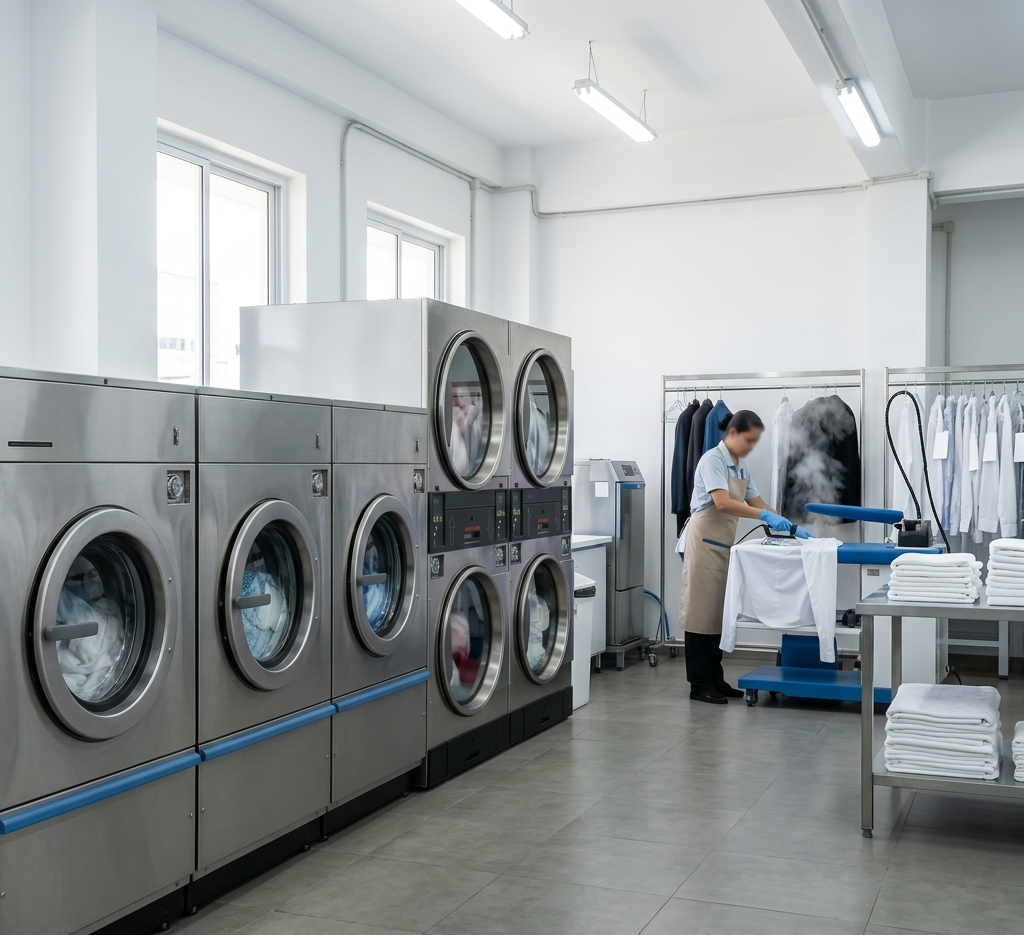
The laundry equipment list for a business is categorised into five functional groups:
- Washing equipment — commercial washing machines for bulk wet cleaning
- Drying equipment — tumble dryers to reduce drying time and improve throughput
- Dry cleaning machines — solvent-based systems for delicate and special-care garments
- Finishing equipment — steamers, irons, and pressing tables for final presentation
- Tagging, packaging, and tracking systems — for order management and customer delivery
Each category serves a distinct operational role. A laundry startup cannot substitute one for another. A business handling only regular clothes may deprioritise dry cleaning machines initially, but finishing and tagging equipment is essential from day one.
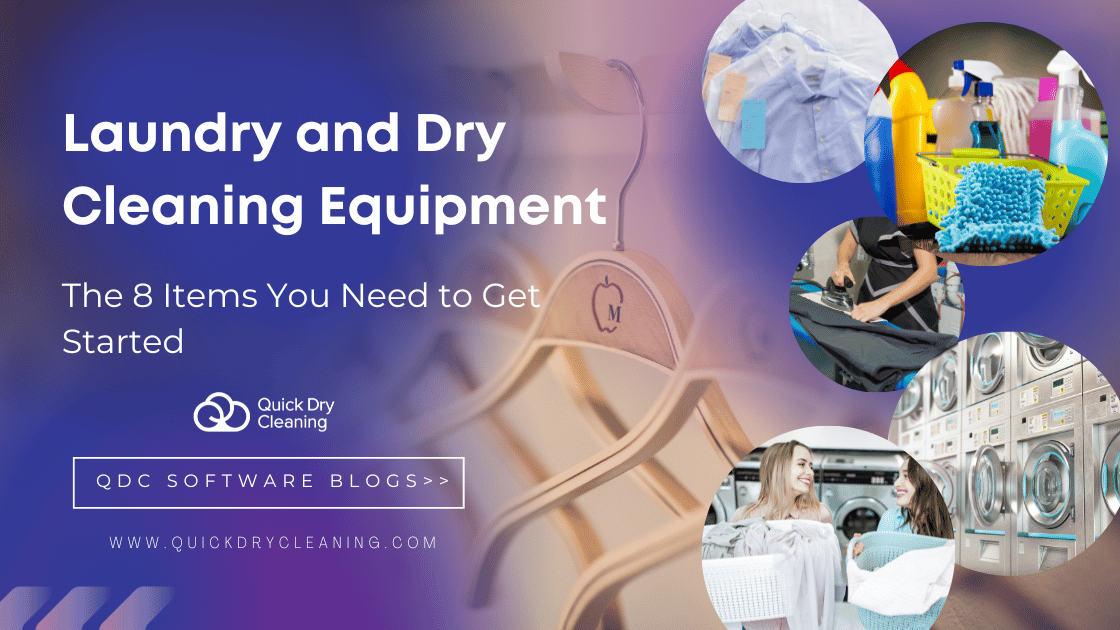
1. Commercial Washing Machines
The most critical investment in your laundry business startup equipment plan. Buy commercial-grade from day one — domestic machines are not built for continuous daily operation and will fail within months under business load.
What to buy: Front-load washer-extractors are the industry standard. High spin speeds (up to 1,200 RPM) extract more water before drying, which directly lowers energy cost per load. Programmable cycle controls let staff run the right wash program per fabric type without guesswork.
Brands in India: Electrolux Commercial, LG Commercial, Girbau, Primus (imported, higher cost); Forbes and Godrej for budget setups.
Price Range in India (2026)
| Machine Type | Capacity | Price (INR) |
|---|---|---|
| Washer-extractor (entry) | 10–15 kg | ₹80,000 – ₹1,50,000 |
| Washer-extractor (mid) | 20–30 kg | ₹1,80,000 – ₹3,50,000 |
| Heavy-duty washer-extractor | 50–100 kg | ₹5,00,000 – ₹12,00,000 |
2. Commercial Dryers
Match dryer capacity to your washer capacity. A 30 kg washer paired with a 15 kg dryer creates a bottleneck that limits your daily throughput — a common and avoidable setup mistake.
Gas vs electric: Gas dryers cost significantly less per cycle and are the right choice if you process more than 80–100 kg per day. Electric dryers are simpler to install and sufficient for smaller operations. Condenser dryers work where external venting is not possible but are less energy efficient.
Worth paying for: Moisture sensor technology stops the machine automatically when clothes are dry — prevents fabric damage and reduces electricity waste.
Price Range in India (2026)
| Dryer Type | Capacity | Price (INR) |
|---|---|---|
| Electric tumble dryer | 10–15 kg | ₹70,000 – ₹1,40,000 |
| Gas tumble dryer | 20–30 kg | ₹1,50,000 – ₹3,00,000 |
| Heavy-duty gas dryer | 50–75 kg | ₹4,00,000 – ₹8,50,000 |
3. Dry Cleaning Machines
Dry cleaning uses chemical solvents to clean garments that cannot tolerate water: woollen suits, silk sarees, formal wear, embroidered pieces, and leather items. In India, demand is concentrated in metro cities and Tier-1 towns where formal and occasion wear volumes are high.
Which solvent type: Avoid PERC-based machines for new setups due to tightening environmental regulations. Hydrocarbon (HC) machines are now the practical standard — gentler on fabrics and lower regulatory risk. Wet cleaning systems handle a meaningful share of “dry clean only” labels at lower machine cost and are worth considering as an entry point.
Decision rule: Do not invest in a dry cleaning machine until you have consistent customer demand. At 5–9 lakh per machine, idle equipment is a significant capital drain. Validate demand first, then invest.
Dry Cleaning Machine Price in India (2026)
| Machine Type | Capacity | Price (INR) |
|---|---|---|
| PERC machine | 8–10 kg | ₹3,00,000 – ₹6,00,000 |
| Hydrocarbon (HC) machine | 10–15 kg | ₹5,00,000 – ₹9,00,000 |
| Wet cleaning system | 10–12 kg | ₹2,50,000 – ₹5,00,000 |
4. Ironing and Finishing Equipment
Most first-time laundry owners under-invest here. Washing and drying are invisible to the customer. The pressed, finished garment is what they judge your business by. Poor finishing destroys retention faster than any other service failure.
What you need and when:
- Steam iron stations with centralised boiler — required from day one, every setup size
- Shirt form finisher — essential if shirts are a significant part of your volume; reduces per-shirt finishing time dramatically
- Flatwork ironer (calender) — required if you serve hotels, hospitals, or any linen-heavy B2B client
- Vacuum pressing table — improves quality and speed for trouser and jacket pressing; worth including in medium setups
Price Range in India (2026)
| Equipment | Price (INR) |
|---|---|
| Steam iron with boiler | ₹15,000 – ₹60,000 |
| Shirt form finisher | ₹80,000 – ₹2,50,000 |
| Flatwork ironer (small) | ₹1,50,000 – ₹4,00,000 |
| Vacuum pressing table | ₹25,000 – ₹80,000 |
5. Tagging and Packaging Systems
Tagging assigns a unique barcode to every garment at intake, linked to the customer’s order. Without it, mix-ups between orders are inevitable — and a lost or swapped garment means a lost customer.
At minimum, a small laundry needs a thermal barcode printer and a manual tagging gun. As volume grows, this connects to laundry management software for end-to-end tracking from intake through delivery. Polythene sleeve packaging protects finished garments and reinforces a professional presentation at pickup or delivery.
Price Range in India (2026)
| Equipment | Price (INR) |
|---|---|
| Thermal barcode tag printer | ₹8,000 – ₹25,000 |
| Manual tagging gun | ₹500 – ₹2,000 |
| Polythene packaging machine | ₹20,000 – ₹60,000 |
| Garment conveyor rail (per metre) | ₹2,000 – ₹5,000 |
Laundry Setup Cost in India (2026)
Cost by Setup Size
Small setup: 1–2 washer-extractors (10–15 kg), 1 tumble dryer, 2 iron stations with boiler, basic tagging. No dry cleaning at launch.
Medium setup: 3–4 washer-extractors (20–30 kg), 2–3 gas dryers, 1 HC dry cleaning machine, shirt form finisher, flatwork ironer, barcode tagging, polythene packaging.
Large setup: Full pressing lines, high-capacity dryers, conveyor garment rail, enterprise laundry software, and industrial-scale washers. Typically for hotels, hospitals, and institutional clients.
| Setup | Daily Volume | Equipment Cost (INR) |
|---|---|---|
| Small (neighbourhood laundry) | 30–50 kg/day | ₹3,50,000 – ₹7,00,000 |
| Medium (commercial laundry) | 100–200 kg/day | ₹12,00,000 – ₹25,00,000 |
| Large (B2B / industrial) | 500+ kg/day | ₹50,00,000 – ₹1,50,00,000+ |
How to Choose the Right Equipment for a Laundry Business
- Define services before buying equipment. Wash-and-fold only? You do not need dry cleaning at launch. Targeting formal wear? A shirt form finisher is essential. Let your service menu drive the equipment list, not the other way around.
- Size for 12 months out, not day one. Undersized machines limit growth and force a costly mid-year upgrade. Buy for projected volume, not current volume.
- Calculate total cost of ownership. A cheaper washer consuming 30% more water and electricity often costs more over three years. Include utilities, maintenance, and repair frequency in your comparison.
- Confirm infrastructure before ordering. Most commercial laundry equipment requires 3-phase electricity, specific water pressure, drain capacity, and in some cases a gas connection or exhaust duct. Discovering gaps after delivery is expensive.
- Prioritise local service networks. A well-known imported brand with no service centre in your city is a liability. Always confirm authorised support is available locally before committing.
Common Mistakes to Avoid
- Using domestic machines. Not built for continuous commercial use. Expect failures within six months and repair costs that eliminate any upfront savings.
- Mismatching washer and dryer capacity. The dryer determines your real throughput. If it cannot keep up with your washers, your entire operation slows.
- Buying dry cleaning equipment before validating demand. 5–9 lakh spent on a machine that sits idle for months is a serious cash flow problem for an early-stage business.
- Buying second-hand without inspection. Refurbished equipment can be a good value — with a verified service history and seller warranty. Unverified machines from online listings are high risk.
- Underbudgeting for finishing and tagging. Allocate at least 15–20% of your total equipment budget here. These directly determine the customer experience and repeat business rates.
The Role of Software in a Laundry Business
Equipment for laundry business operations handles the physical work. Software handles everything else: order intake, garment tracking, billing, customer notifications, delivery scheduling, and performance reporting.
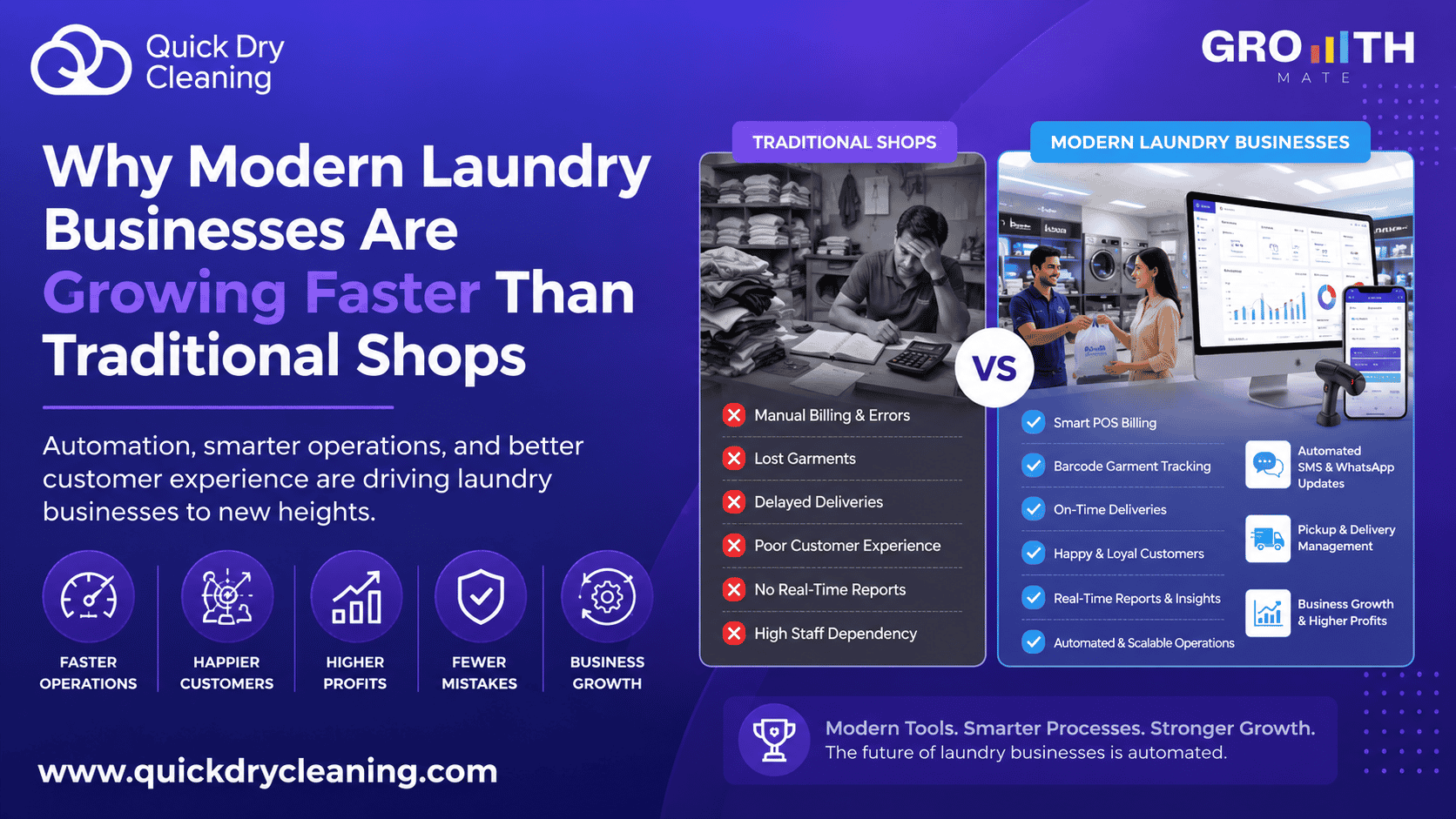
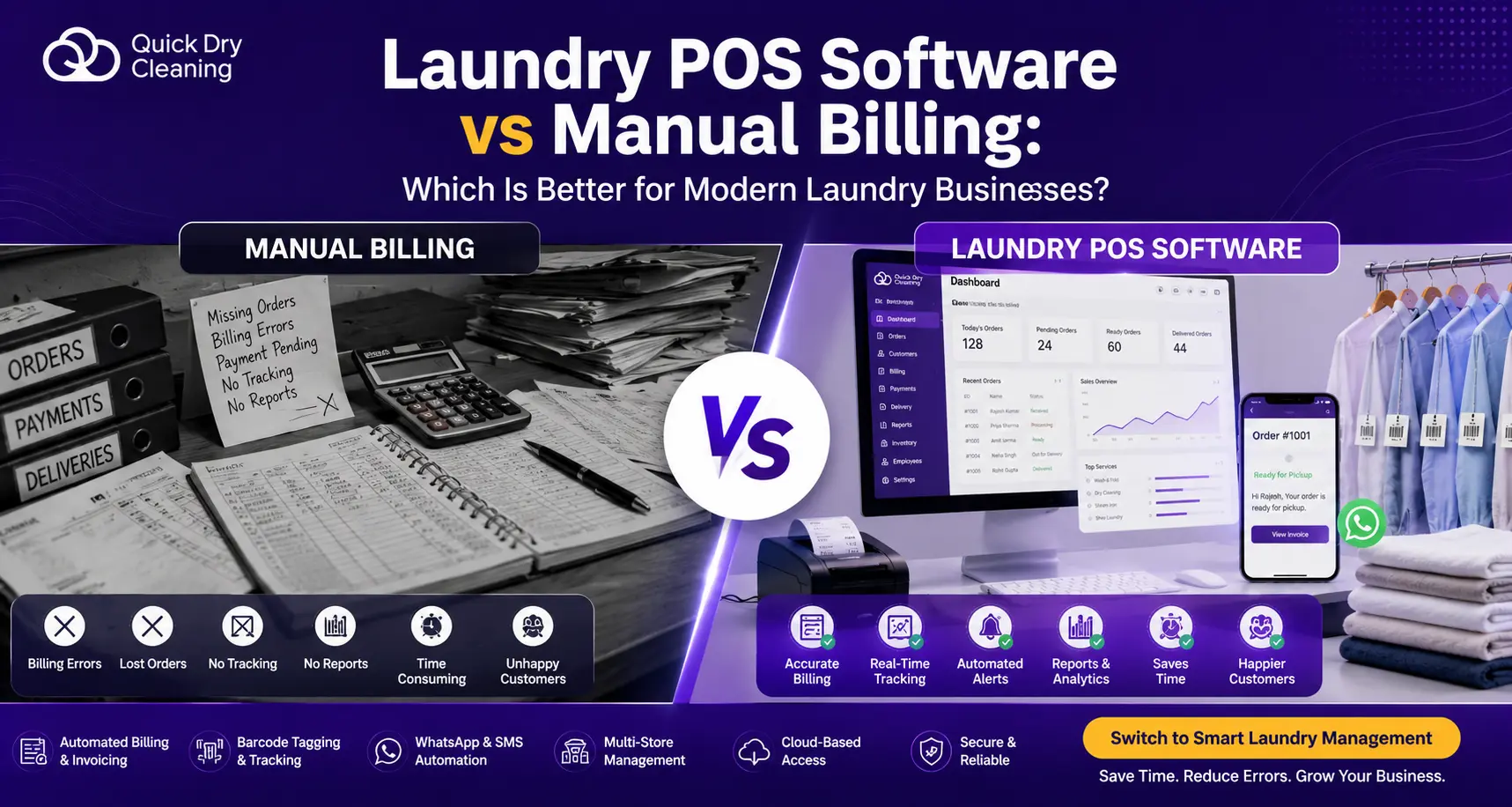
Without software, a well-equipped laundry still struggles with garments mixed between orders, billing errors on multi-service jobs, no visibility into route efficiency, and no data on which services are actually profitable.
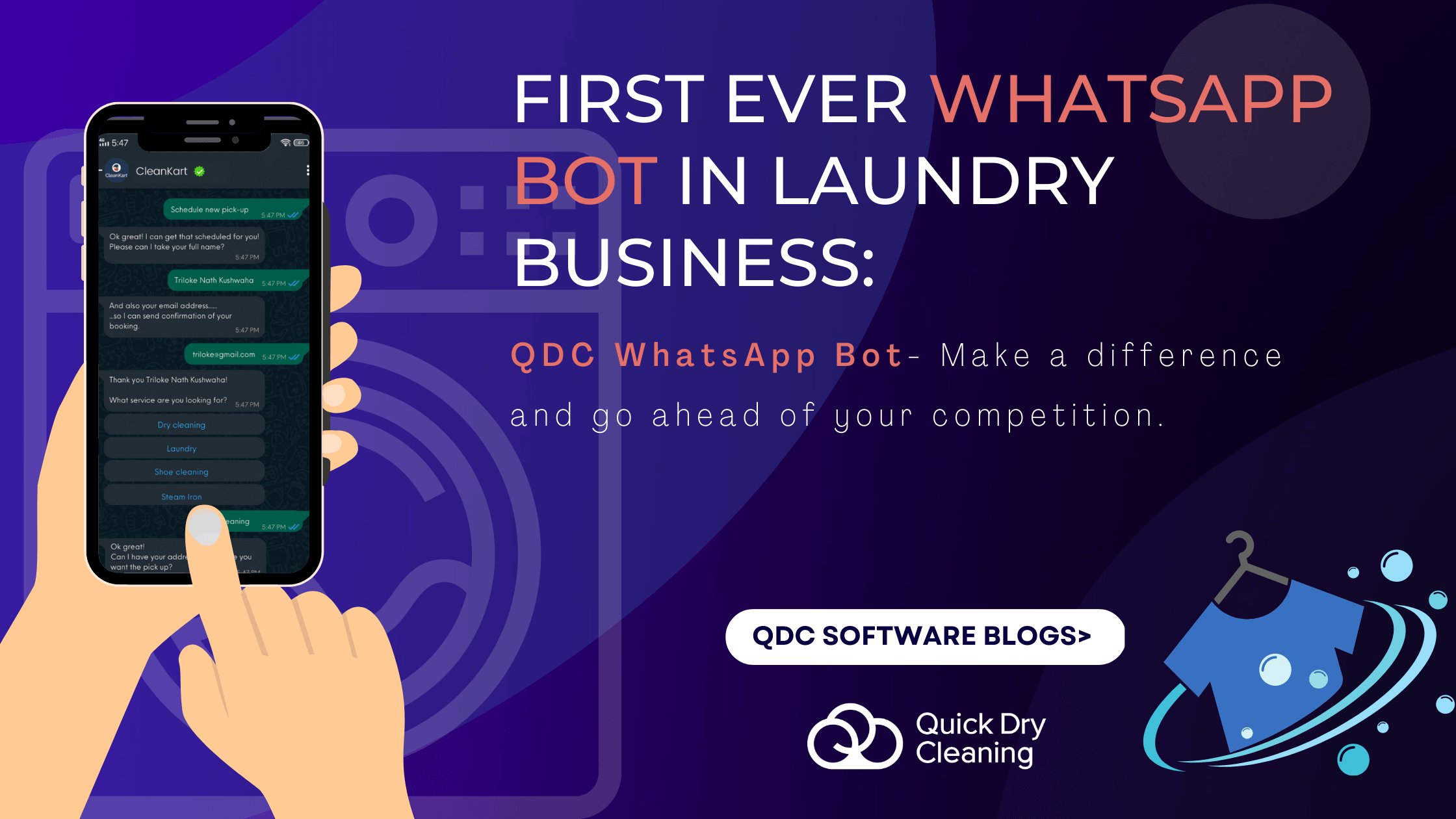
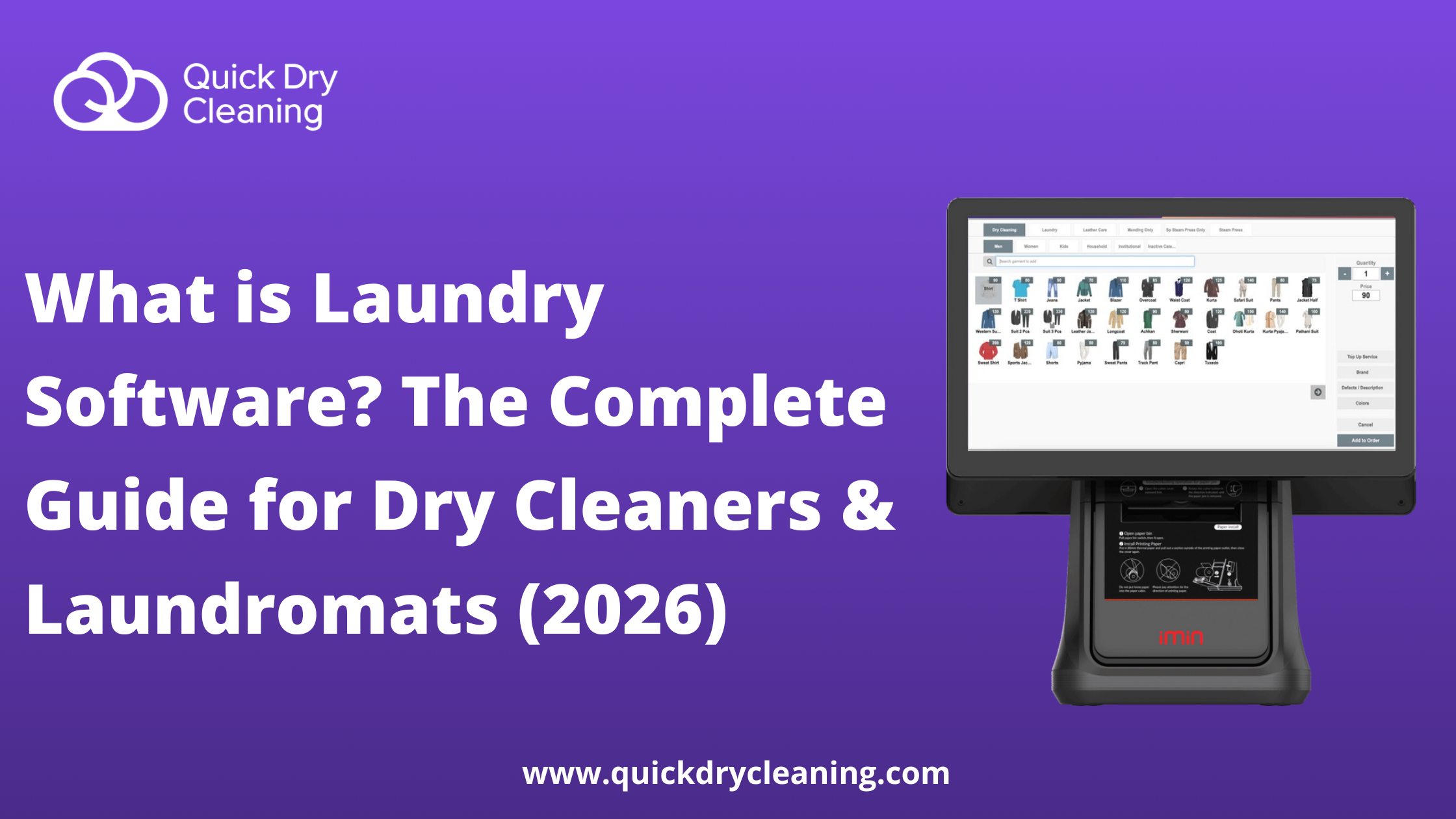
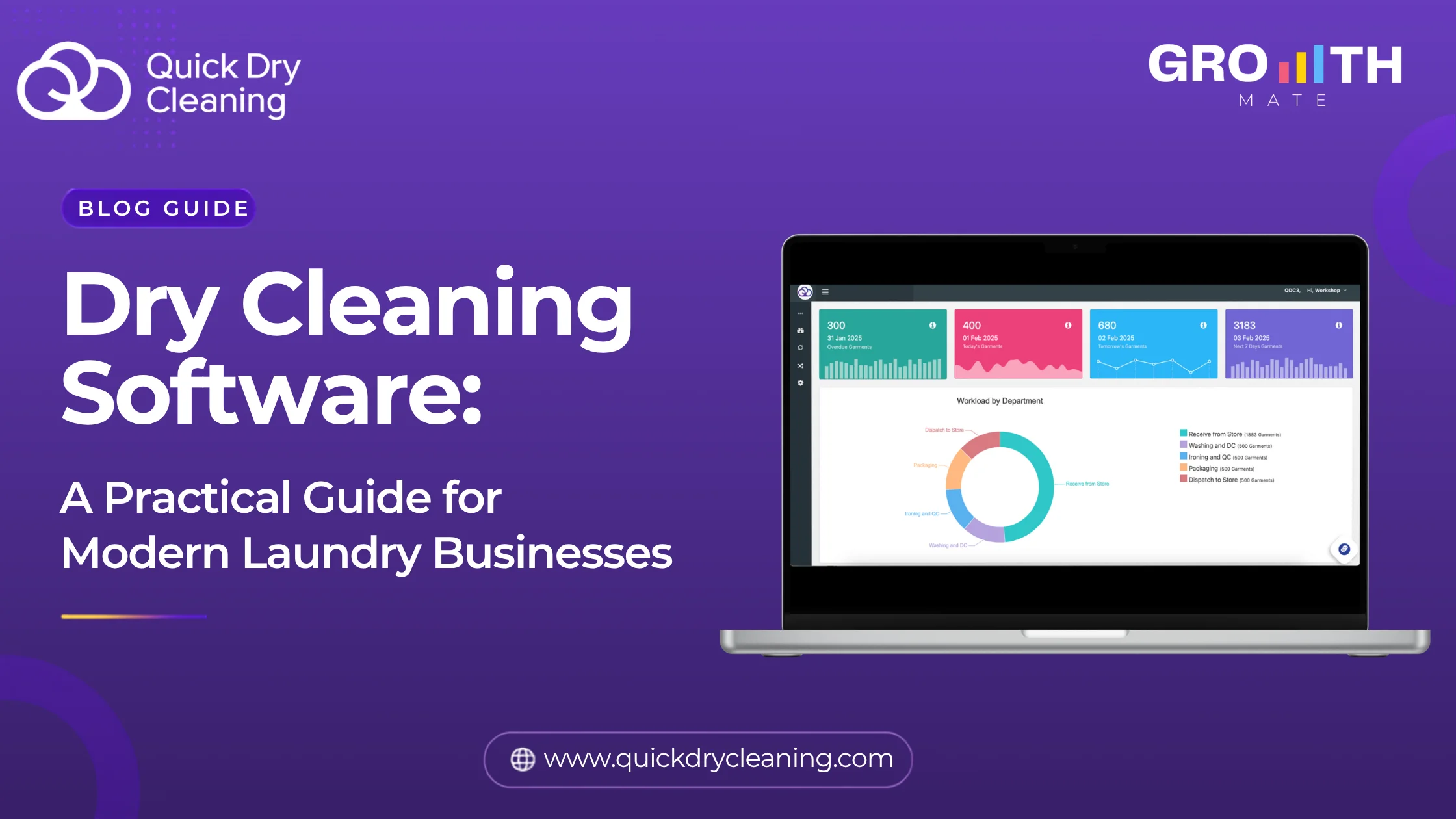
Solutions like Quick Dry Cleaning are built for the Indian laundry market, with barcode integration, WhatsApp and SMS order updates, delivery route management, and dashboards covering throughput, revenue by service, and staff productivity.
In 2026, customers expect real-time updates and digital invoices. Businesses on manual systems consistently lose ground to tech-enabled competitors, regardless of cleaning quality.
Conclusion
Once your equipment is in place, the next challenge is managing orders, tracking garments, handling billing, and keeping customers informed — all without errors or delays.
Quick Dry Cleaning (QDC) is a laundry management software built for the Indian market. It connects your barcode tagging system to order management, automates customer notifications via WhatsApp and SMS, and gives you real-time visibility into daily throughput, revenue, and delivery status.
Hundreds of laundry businesses across India use QDC to reduce garment mix-ups, improve turnaround times, and grow repeat customer rates.
Book a Free Demo — see how QDC works for your setup, with no commitment required.