Running a laundry business involves much more than washing and cleaning clothes. Every day, you have to accept orders, record garments, calculate service charges, generate invoices, collect payments, track pending orders and answer customer questions.
When these tasks are managed with handwritten receipts, spreadsheets or disconnected apps, billing can quickly become difficult to control.
That is where laundry billing software comes in.
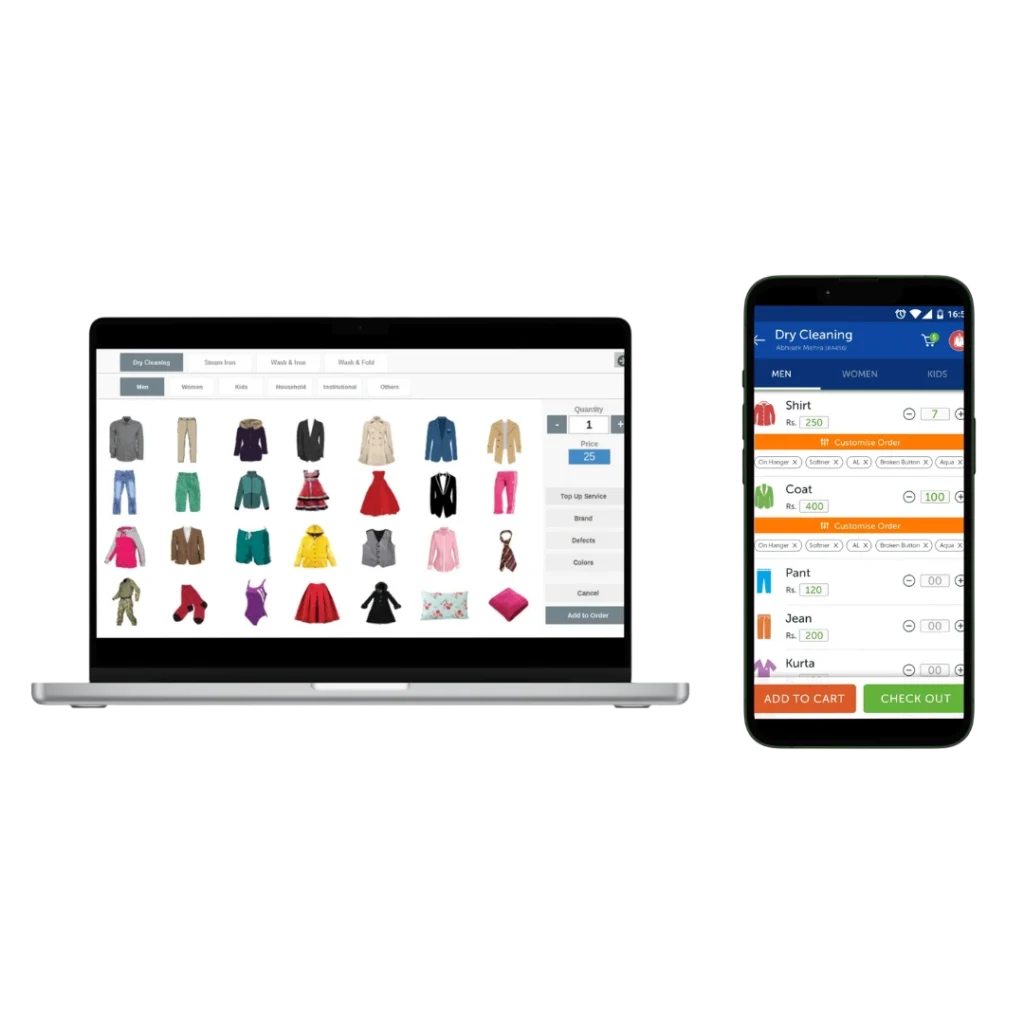
A dedicated billing system is designed around the way laundry and dry-cleaning businesses actually operate. Instead of treating every transaction like a generic retail sale, it can support garment-based services, different pricing models, order tracking, payment status, tax calculations and, depending on the platform, pickup and delivery workflows.
If you are evaluating software for a laundromat, dry cleaner, wash-and-fold business or laundry delivery service, this guide explains what to look for, how much it can cost and how to choose the right system.
Book your demo now!
What Is Laundry Billing Software?
Laundry billing software is a digital system used to create invoices, manage customer orders and track payments for laundry and dry-cleaning businesses.
Unlike basic invoicing software, laundry-specific systems can be designed around services such as:
- Washing and folding
- Dry cleaning
- Ironing and pressing
- Stain treatment
- Express services
- Per-piece pricing
- Per-kilogram pricing
- Pickup and delivery
- Commercial laundry accounts
Modern laundry software can also connect billing with customer records, order status, payment tracking, garment tags and reporting.
Why Do Laundry Businesses Need Billing Software?
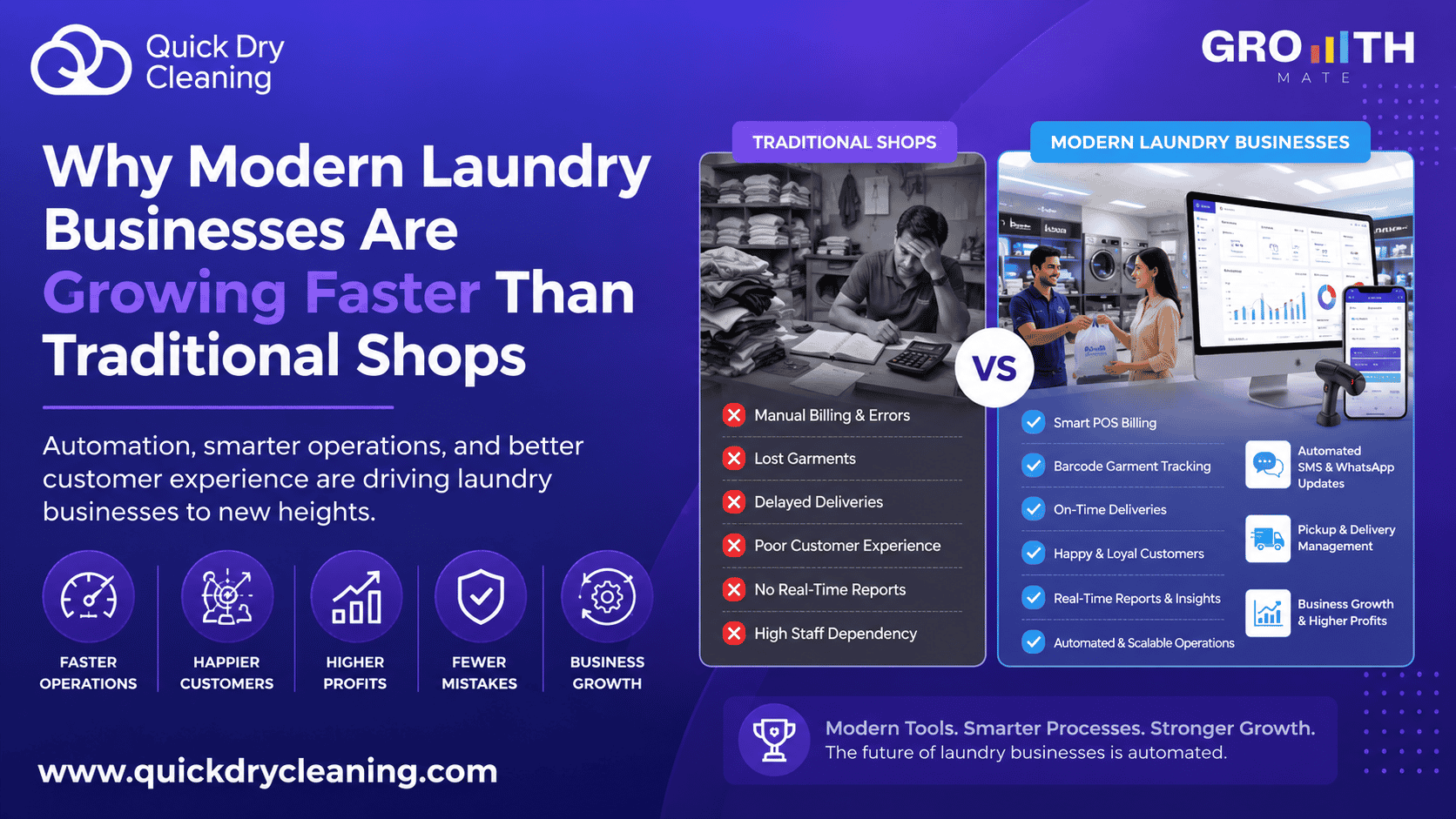
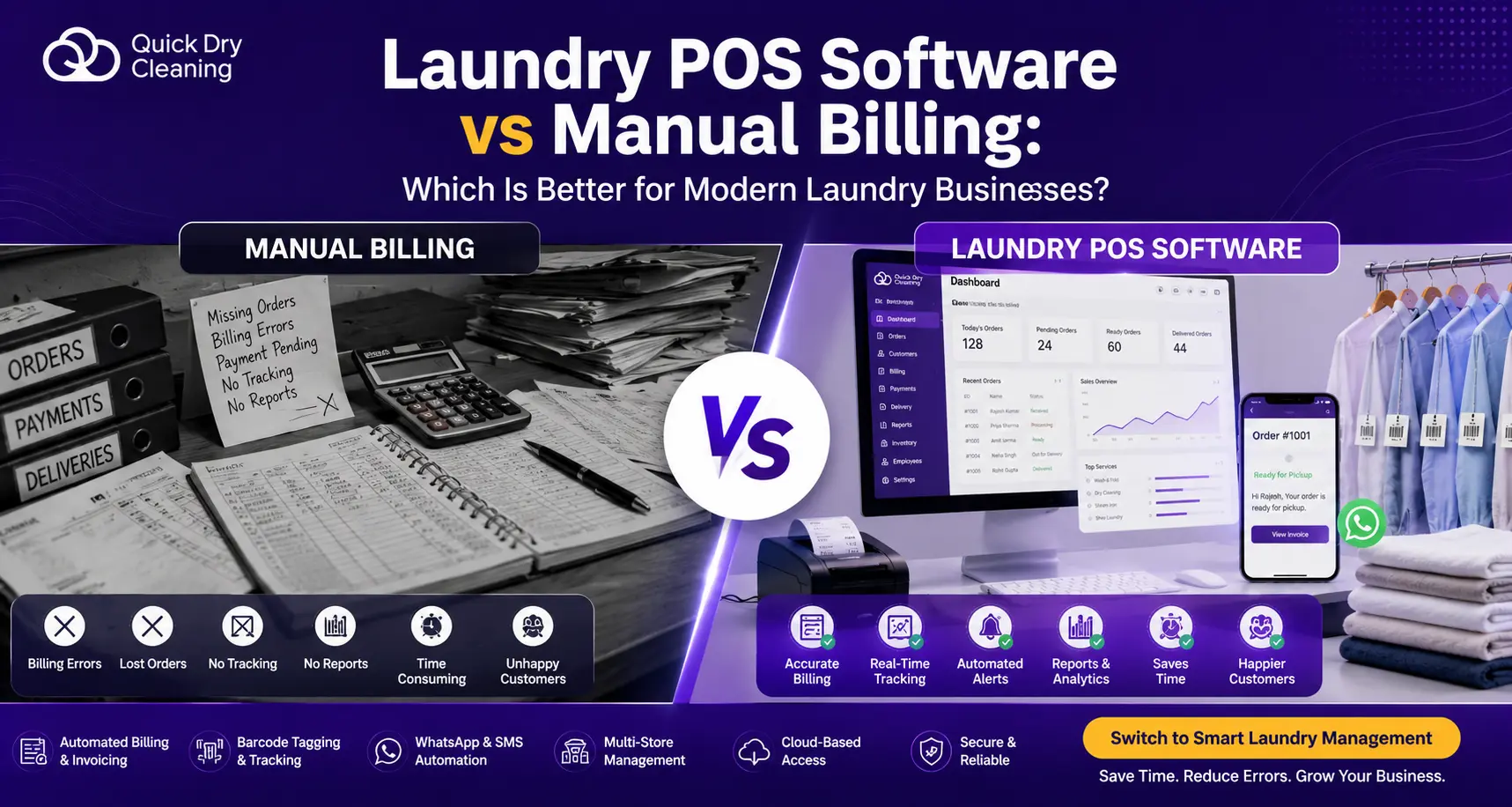
Manual billing may work when a business has very few orders. The problem is that the process becomes harder to control as order volume increases.
Common problems include:
- Incorrect garment counts
- Wrong service prices
- Missing orders
- Unpaid invoices
- Difficulty finding old customer records
- Inconsistent pricing between employees
- Manual tax calculations
- Time-consuming end-of-day reporting
Research into laundry billing systems shows that manual calculation and pricing mistakes are recurring operational problems.
A dedicated system creates a central record of orders and payments. Instead of relying on notebooks or separate spreadsheets, staff can use predefined services and prices.
This is particularly useful when several employees handle the counter. Once service rates are configured, the same item can be billed consistently regardless of who creates the invoice.
7 Features to Look for in Laundry Billing Software
1. Automated Billing and Accounting
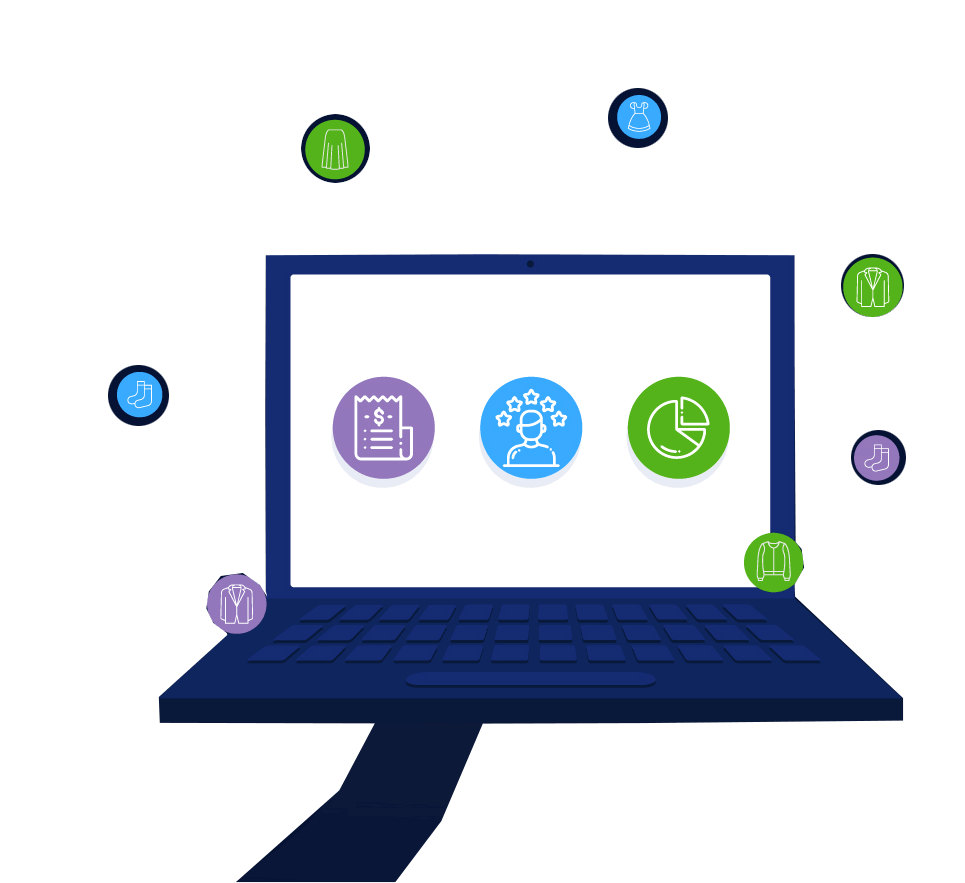
An efficient billing system is the foundation of any laundry business. Look for software that automatically generates accurate bills based on garment types, services, quantities, and pricing. It should support different payment methods, discounts, taxes, and GST-compliant invoicing where applicable.
Beyond billing, integrated accounting features help you track daily sales, expenses, outstanding balances, refunds, and overall cash flow. This gives you a clearer picture of your business finances without relying on multiple spreadsheets or manual calculations.
2. Garment Tags and Order Tracking
Managing multiple customer orders can become challenging, especially during busy periods. Laundry billing software should offer garment tagging through barcodes or QR codes to identify individual garments and link them to the correct customer order.
Order tracking helps staff monitor each order throughout the cleaning process, from collection and processing to quality checks and delivery. This reduces the risk of misplaced garments, order mix-ups, and delivery delays while improving operational efficiency.
3. Payment Tracking and Automated Reminders
Keeping track of pending payments is essential for maintaining healthy cash flow. Your laundry billing software should record payments, partial payments, outstanding balances, refunds, and customer credit.
Automated payment reminders through SMS or WhatsApp can help notify customers about pending dues and unpaid invoices. The system should also maintain a clear payment history for each customer, making it easier to reconcile accounts and follow up on overdue payments.
4. Customer Management and CRM
A built-in customer relationship management (CRM) system helps you maintain customer profiles, contact information, order histories, preferences, and spending patterns in one place.
With this information, you can identify regular customers, understand their purchasing behaviour, and deliver more personalized service. A good CRM also helps staff access customer details quickly, resolve queries efficiently, and build long-term customer loyalty.
5. Marketing and Customer Engagement Features
Modern laundry billing software should help you attract new customers and encourage repeat business, not just manage transactions. Look for built-in marketing and customer engagement tools that allow you to run targeted campaigns and communicate with customers.
Useful features include:
- WhatsApp and SMS marketing: Share offers, promotions, service updates, and festive greetings.
- Loyalty programs: Reward repeat customers with points, discounts, or special benefits.
- Coupons and promotional offers: Encourage customers to place new orders and try additional services.
- Customer segmentation: Create targeted campaigns based on purchase history, order frequency, or customer activity.
- Automated follow-ups: Re-engage inactive customers and encourage them to return.
These features help laundry businesses strengthen customer relationships, increase repeat orders, and generate more revenue from their existing customer base.
6. Reports and Analytics
Making business decisions without accurate data can lead to missed opportunities and unnecessary expenses. Laundry billing software should provide detailed reports and analytics to help you understand how your business is performing.
Look for reports covering daily sales, monthly revenue, service-wise performance, pending payments, expenses, customer activity, and order volumes. Multi-branch businesses should also be able to compare performance across locations.
Marketing reports are equally valuable. Tracking campaign performance, customer responses, repeat purchases, and revenue generated from promotions helps you understand which activities are delivering results. With access to these insights, you can make informed decisions about pricing, marketing budgets, staffing, and business expansion.
7. Multi-Location Management and Centralized Control
If you operate multiple laundry or dry cleaning outlets, managing each location separately can make it difficult to maintain consistency and monitor overall business performance. Look for laundry billing software that supports multi-location management and centralized operations.
The software should help you manage billing, customer records, order tracking, and business performance across different branches from a centralized system. Branch-wise reports allow you to compare sales, monitor order volumes, and understand which locations are performing well.
Laundry Billing Software vs Generic Invoicing Software
A common question is:
Why not simply use generic invoicing software?
For a very small operation, generic software may be enough.
But laundry businesses have workflows that ordinary invoicing tools may not handle particularly well.
| Requirement | Generic Invoicing Software | Laundry Billing Software |
|---|---|---|
| Basic invoices | Yes | Yes |
| Customer records | Usually | Yes |
| Garment-level tracking | No | Yes |
| Barcode garment tags | No | Yes |
| Per-piece laundry pricing | No | Yes |
| Weight-based services | No | Yes |
| Laundry order status | No | Yes |
| Pickup and delivery management | No | Yes |
| Laundry-specific reports | No | Yes |
| GST and tax configuration | Depends on software | Yes |
How Much Does Laundry Billing Software Cost?
The cost of laundry billing software is not fixed. Pricing varies depending on the software provider, the size of your laundry business, the features you require, and the number of users or locations. Some providers offer monthly or annual subscription plans, while others charge setup fees or provide customized pricing based on your business needs.
Before choosing a solution, it is important to understand what is included in the price. A basic plan may cover billing and invoicing, while a more comprehensive solution may include garment tracking, customer management, payment reminders, marketing tools, reports and analytics, and multi-location management.
Factors That Affect Laundry Software Pricing
Several factors can influence the overall cost of laundry billing software:
Business Size: A single laundry shop may have different requirements compared to a large dry cleaning business or a multi-branch laundry chain.
Features and Modules: Features such as billing, garment tracking, customer management, marketing automation, and advanced reporting can affect pricing.
Number of Users and Locations: Some providers calculate pricing based on the number of staff accounts, outlets, or branches you need to manage.
Setup and Implementation: Data migration, software configuration, staff training, and onboarding may involve additional charges.
Integrations and Support: Payment integrations, SMS or WhatsApp services, hardware compatibility, and premium customer support may increase the overall cost.
When comparing laundry billing software, consider more than just the subscription price. Evaluate the features included, any additional charges, the quality of customer support, and the potential to simplify daily operations as your business grows.
How to Choose the Best Laundry Billing Software
Choosing the best laundry billing software requires more than comparing prices. Check whether the software offers essential features such as automated billing, accounting, garment tagging, order tracking, payment management, and customer records. Also, look for marketing tools, detailed reports, pickup and delivery management, and multi-location support if your business needs them.
Before making a decision, compare different software providers based on ease of use, available features, customer support, pricing, and scalability. Make sure the software fits your daily workflow, reduces manual work, and can support your business as it grows. Booking a demo is a practical way to evaluate whether a solution meets your requirements.
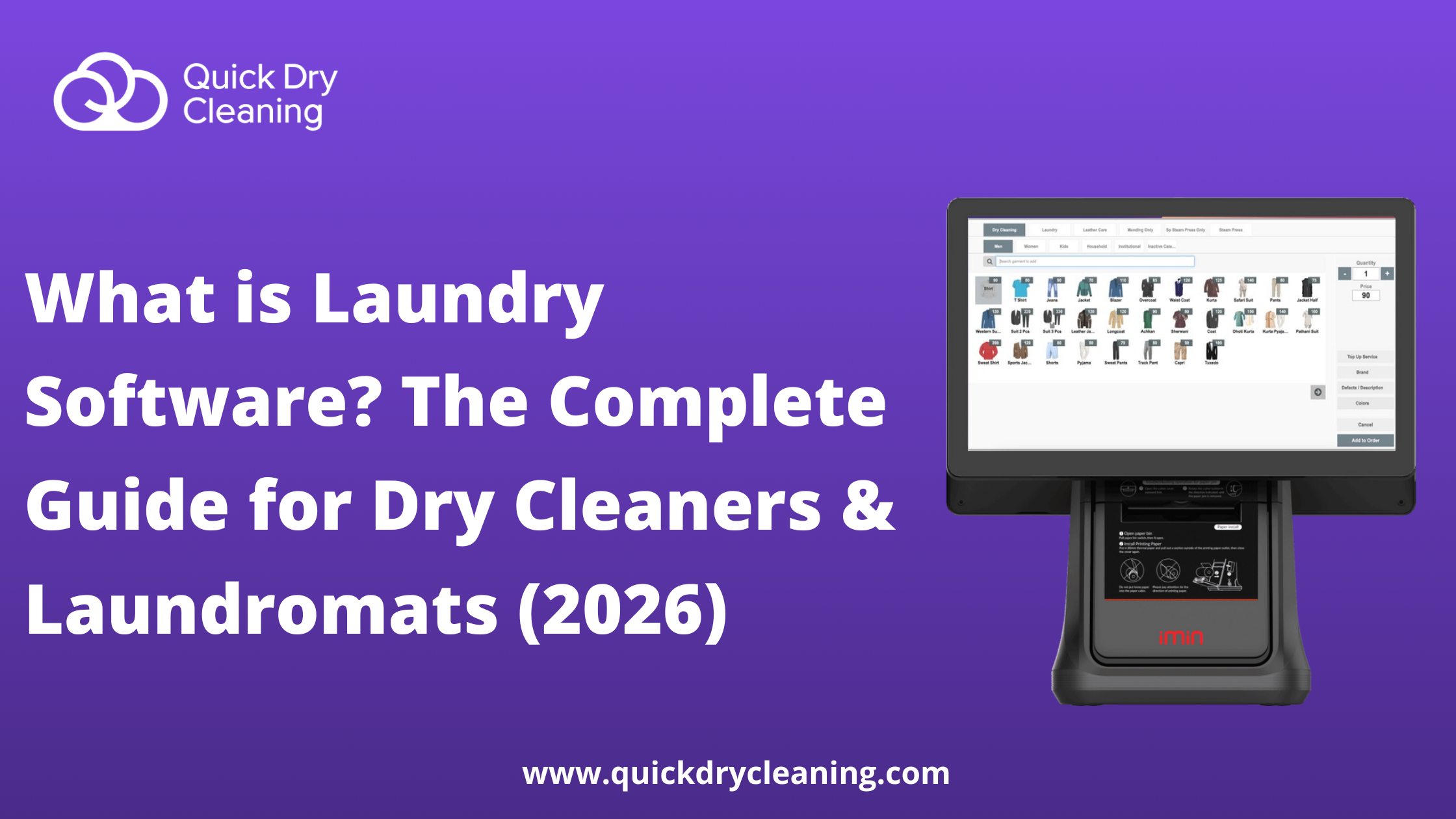
With 16+ years of industry experience, Quick Dry Cleaning Software stands out as a trusted choice for laundry and dry cleaning businesses. It offers billing and accounting, garment tracking, customer management, AI-powered WhatsApp marketing, and pickup and delivery management to help businesses streamline operations and grow.
Choose Quick Dry Cleaning Software to bring your laundry business operations together with industry-focused technology and experience.
Conclusion
The right laundry billing software does more than generate invoices. It helps you manage garment-wise billing, track orders, monitor payments, maintain customer records, and make informed business decisions. Choosing a solution with laundry-specific features can save time, reduce manual errors, and create a smoother experience for both your staff and customers.
Ready to upgrade your laundry billing process? Book a Demo with Quick Dry Cleaning Software and explore how the right solution can support your business.